
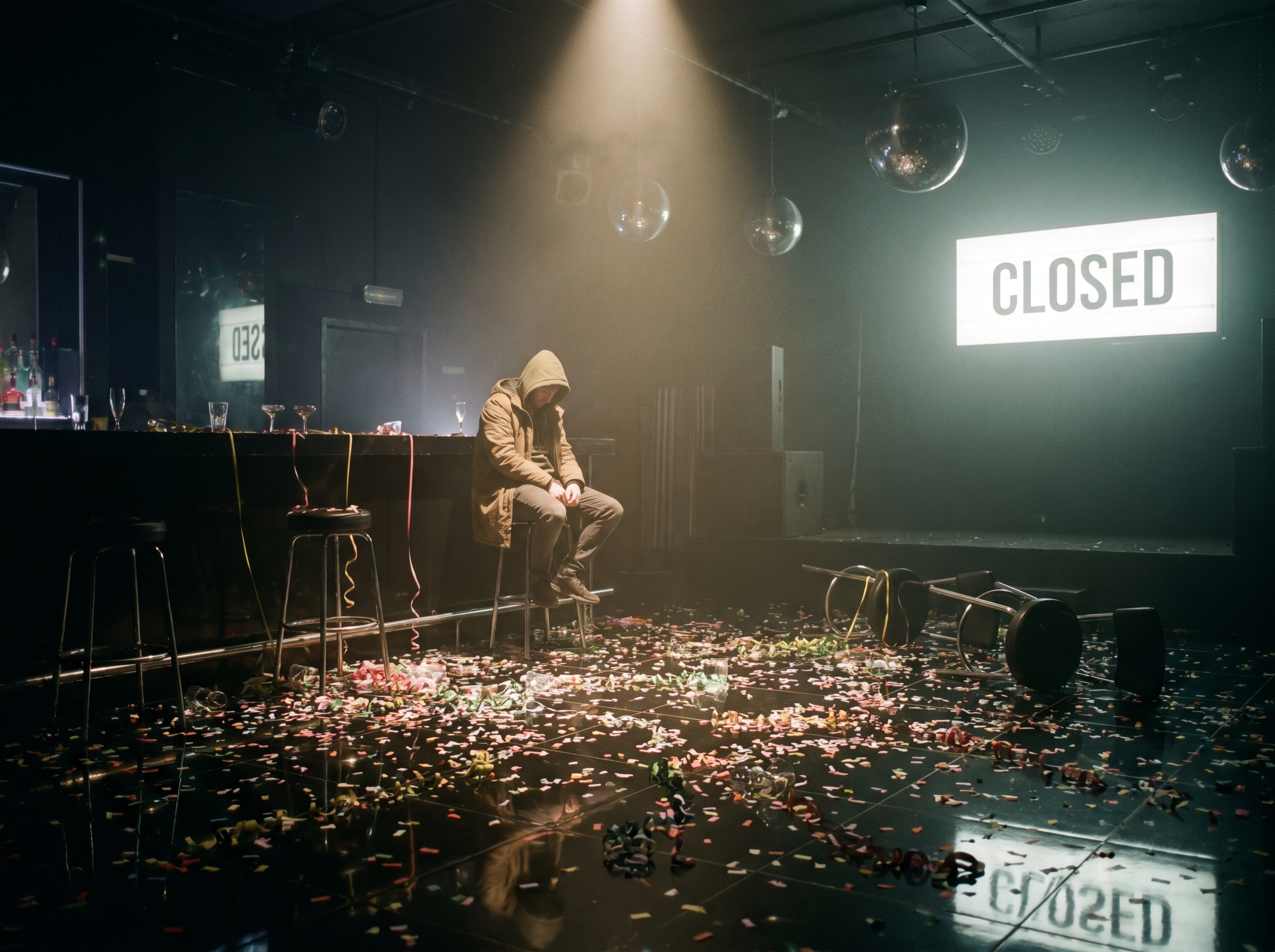
Dance-pop is often misunderstood as a happiness machine. The beat moves, the chorus lifts, the lights come up, and the listener is supposed to feel better. That version exists, and sometimes it is wonderful. But the more durable tradition is stranger: dance music that does not erase sadness, only teaches it choreography.
When dance-pop stops smiling, it does not necessarily slow down. In fact, speed can make the sadness sharper. A fast song can feel like avoidance. A four-on-the-floor pulse can become a refusal to collapse. The body keeps time because the mind cannot be trusted with silence.
Robyn remains one of the clearest examples of this emotional technology. Her best-known dance-pop understands loneliness as something that happens in public. The track can be bright, clean, and physically direct while the vocal carries humiliation, longing, or impossible restraint. The result is not contradiction. It is realism.
Tove Lo approaches the same territory with a more bruised directness. Her songs often refuse to make emotional damage elegant. They can be messy, physical, funny, and unflattering. That bluntness helps because club music can become too tasteful about pain. Sometimes the point is not catharsis. Sometimes the point is admitting that desire has made you ridiculous and you are going out anyway.
The Weeknd’s pop universe has long treated nightlife as a place where pleasure and consequence blur. At his scale, the darkness can become cinematic, even mythic, but the underlying idea is familiar: the night gives permission, then sends an invoice. Synths, cars, rooms, substances, voices, and lights all become part of the same emotional machine.
Kylie Minogue represents a different lineage, one where dance-pop elegance can still hold melancholy. Her catalog often reminds listeners that smoothness is not the opposite of feeling. A graceful disco-pop surface can carry ache precisely because it refuses melodrama. Sometimes the most adult sadness in pop is the kind that keeps dancing without demanding pity.
The best vulnerable dance-pop does not pause the party to explain itself. It lets the ache leak through the arrangement. A small melodic turn, a slight strain in the vocal, a lyric that lands too plainly, a bridge that suddenly empties the room: these details can do more than a grand confession.
There is a structural reason sadness works so well with dance production. Repetition is both musical and psychological. People repeat thoughts they cannot solve. They repeat patterns they claim to understand. They repeat nights, names, mistakes, texts, outfits, routes home. A dance track’s loop can mirror that compulsion without spelling it out.
This is why the club can be such a powerful setting for vulnerable pop. It is not private, but it is intimate. It allows people to be alone together. You can cry next to a speaker and still be part of the room. You can perform confidence while the song tells the truth on your behalf.
The danger is melodramatic shortcut. Some songs think adding a sad lyric to a dance beat automatically creates depth. It does not. The arrangement has to understand the emotional claim. If the production is too generic, the sadness feels pasted on. If the vocal overperforms, the song loses the tension that made it interesting.
Robyn’s influence persists because she rarely overexplains. The writing gives enough. The beat carries the rest. That restraint is hard to imitate because it requires trust: trust that the listener can feel the gap between what the song is doing physically and what it is saying emotionally.
Tove Lo’s best work shows another route: let the mess be obvious, but make the craft clean enough to hold it. The contrast between lyrical exposure and pop precision can be thrilling. It lets the listener enjoy the song without denying the damage inside it.
There is also a post-pandemic and post-platform fatigue underneath a lot of current dance-pop vulnerability. People are tired of mandatory resilience. They are tired of turning every bad feeling into content or growth. A club track that admits instability without stopping the beat can feel more honest than another anthem about overcoming everything.
The phrase “sad banger” became overused because it named something real too efficiently. But the best examples deserve better language. They are not just sad songs with beats. They are songs where motion is the emotional argument. The dance floor is not a contradiction to grief; it is one of grief’s social forms.
When dance-pop stops smiling, it often becomes more generous. It makes room for listeners who want release but cannot access uncomplicated joy. It says you do not have to be healed to move. You do not have to be fine to look alive under lights.
That may be why these songs last. Pure euphoria is beautiful, but it can be hard to revisit when your life does not match it. A track that understands mixed feeling can follow you through more rooms. It can soundtrack the pregame, the mistake, the walk home, and the morning after when the glitter looks less like magic and more like evidence.
What matters is not whether every artist involved sounds alike. They do not, and forcing them into one tidy movement would flatten the point. The shared signal is more atmospheric than technical: a willingness to let pop carry tension, to let image behave like structure, and to let the dance floor act as a stage for complicated feeling rather than simple escape.
That is why the best writing around this music has to resist the easy headline. A song can be fun and defensive at once. A visual era can be beautiful and slightly suspect. A club track can be engineered for release while still carrying a private bruise. Fever Signal is most interested in that overlap, where style is not decoration but evidence.
The healthier future for this lane will depend on restraint. The internet rewards constant escalation: brighter visuals, harder hooks, bigger claims, more mythology, faster reinvention. Some artists will burn out trying to turn every release into an event. The better work tends to make its own weather slowly, giving listeners enough surface to enter and enough shadow to return.
For a small publication, that restraint matters as much as the subject matter. Fever Signal is not trying to crown a scene before it exists, or pretend every stylish release is a cultural rupture. The more useful task is slower: notice patterns, name pressures, separate mood from substance, and give emerging work enough context without inflating it into mythology. Underground pop deserves writing that can enjoy the lighting without being fooled by it.
That also means leaving room for failure. Not every glossy hook earns its drama. Not every visual era deserves the word “world.” Not every artist with a coherent palette has a coherent point of view. The current moment is exciting because the tools for self-construction are everywhere, but that abundance also makes imitation easier. The strongest work usually contains some resistance to its own aesthetic, a detail that feels inconvenient, funny, wounded, plain, or too specific to have been generated by trend alone.
The listener’s job is not to police pleasure until it dies. A great pop song can be immediate, silly, expensive-sounding, emotionally obvious, or built for one perfect walk to the train. But criticism can ask whether the pleasure has texture. Does the track leave a residue after the first rush? Does the image reveal a person, a character, a scene, or only a reference board? Does the performance understand what it is protecting? Those questions keep the conversation alive after the chorus ends.
Fever Signal’s interest in nightlife-pop, alt-pop, dark dance-pop, and visual culture starts there: in the gap between surface and signal. The surface matters. The signal matters more.
A useful archive should age better than a rollout. It should still make sense when the teaser clips are gone, when the palette changes, and when the artist has moved to another room. That is the standard here: not hype that expires by next week, but criticism that helps the reader understand why a sound, image, or pose felt charged in the first place.
The music after midnight is rarely pure. It is commercial and private, theatrical and practical, funny and wounded, sometimes brilliant and sometimes just dressed well. Writing about it honestly means keeping all of those truths in the frame at once, even when the cleaner story would be easier to sell. That friction is the point of the whole signal, and always has been. The most convincing version of this editorial frame is patient rather than breathless. It lets a song be minor without treating that as failure, and lets a small artist be promising without pretending promise is proof. That distinction is what keeps a niche publication credible. Taste is not the same as hype; taste is the ability to hear scale, limits, texture, and possibility at the same time. It also remembers that restraint can be more persuasive than volume, especially in a culture trained to mistake loudness for arrival and saturation for meaning. The archive should feel edited, not inflated, and skeptical without becoming allergic to pleasure, because pleasure is part of the evidence too, not a guilty exception to it at all.